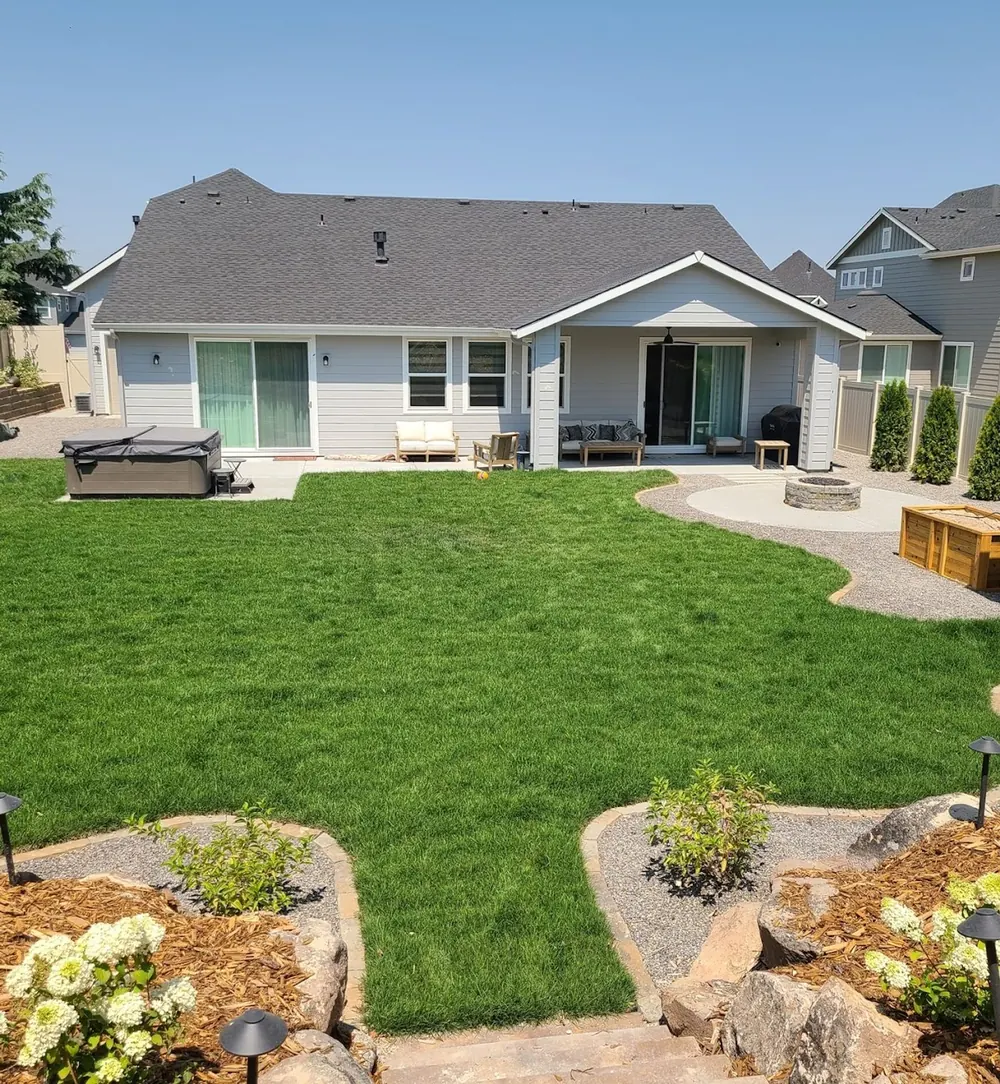
Water-Wise Landscapes for the High Desert.
Boise averages about 11.5 inches of precipitation a year, and July and August together bring less than half an inch, so a Treasure Valley landscape lives on irrigation. Water-wise design isn't a yard of rock. It groups plants by the water they need, puts beds on drip and lawn on efficient sprinklers, runs on a weather-aware controller, keeps lawn where you'll use it, and chooses plants suited to alkaline soil and summer heat.
- Precipitation
- About 11.5 inches a year in Boise (NOAA, 1991–2020)
- Canal water
- About mid-April to early October
- Soil
- Alkaline, often pH 7.5 to 8.2
- Complete backyard
- $75k–$130k, design and build
What Makes the Treasure Valley Different?
The valley is high desert. NOAA's 1991–2020 normals put Boise's average precipitation at about 11.5 inches a year, most of it falling from November to May. July and August average less than half an inch between them, July's average high is about 93°F, and Boise sees about 55 days a year at 90°F or more.
University of Idaho Extension puts it plainly: a traditional landscape with trees needs more than 40 inches of water over a growing season to stay green, and the valley gets less than a third of that in a whole year. Low humidity raises what plants use. Almost everything green in a Boise yard in August is green because of irrigation.
That's the case for water-wise design. It doesn't mean a yard of gravel. It means a landscape planned so each plant gets the water it needs, when it needs it, and no more.
Canal Water or City Water?
Many Treasure Valley yards are watered by pressurized irrigation: canal water diverted from the Boise River and piped to each lot, completely separate from the drinking water system. Nampa, Meridian and Boise require these systems in new subdivisions. The Nampa & Meridian Irrigation District turns its systems on around April 15 and off around the first week of October, depending on the year's water supply.
Canal water shapes the design. The district filters it to about 1/16 inch, which suits sprinklers, but drip zones need their own finer filter. It also recommends designing each zone to draw no more than 5 to 7 gallons per minute. In Boise, the city runs pressure irrigation in a handful of subdivisions, most of them on odd and even watering days, and canal companies and irrigation districts serve the rest; the city's map shows which one serves your address.
Lots without canal water irrigate with city water, which is treated drinking water. In Boise, about 70% of the drinking water supply comes from groundwater. Either way, a good plan works in late September as well as in July, and doesn't fall apart in a short water year.
Hydrozones: Group Plants by Thirst
The single biggest step is grouping plants with similar water needs on the same valve. University of Idaho Extension recommends it, and it's where many older yards go wrong: shrubs on lawn spray, trees on a ten-minute lawn schedule, natives drowned beside annuals.
- Lawn. Its own sprinkler zones, set for the grass and how much sun each area gets.
- Shrub and perennial beds. Drip, with sunny and shaded beds on separate valves.
- Trees. Deep, infrequent water out to and past the drip line. Extension advises soaking established trees 12 to 15 inches deep, and watering new trees weekly for up to three growing seasons.
- Natives and dry banks. Drip while they establish, then much less once they're rooted.
- Pots and edibles. A drip zone of their own, watered more often.
Trees complicate the picture, because their roots run under lawns and beds alike. We place them where their zone can water the whole root area, not just the trunk, and we keep the lawn schedule from being the only water a tree ever gets.
Drip, Sprinklers and Smart Controllers
Drip puts water at the roots of beds, shrubs and young trees with almost no runoff or overspray, and it's the only sensible choice on slopes and narrow strips. For lawns, rotors and high-efficiency nozzles laid out for head-to-head coverage water more evenly than mismatched spray heads, so the whole lawn stays green without the dry spots that tempt people to overwater the rest.
The controller matters as much as the pipe. EPA's WaterSense program estimates that replacing a clock-based timer with a labeled weather-based or soil-moisture controller can save an average home up to 15,000 gallons a year, and it cites estimates that as much as half the water used outdoors is lost to overwatering. A smart controller adjusts on its own for heat waves, cool spells and spring rain.
Design for the water you have. On canal systems we size zones to the district's flow guidance, filter the drip zones and plan for the season to end in early October. On city water, every zone is sized to the home's pressure and flow. Boise's own advice for lawns is to water two or three times a week for 40 to 50 minutes, early or late in the day, and to mow at the mower's highest setting.
Lawn Where It Earns Its Place
Lawn is the thirstiest surface in most yards, and also the best one for children, dogs and a game of catch. The real question isn't lawn or no lawn. It's how much, where and in what shape. One well-shaped panel where you'll actually play does more than strips along the fence and corners no mower likes.
Shape it for the sprinklers. Simple curves and rectangles water evenly, while narrow strips and tight corners are hard to water without spraying the fence, the walk or the house.
Choose the grass for the job. Extension notes that turf-type tall fescue will live on the deep, infrequent watering that trees prefer, which many lawn grasses won't. If your CC&Rs require a share of lawn, we meet it with the most useful lawn you can have, then make every other surface water-wise.
Plants and Soil for the Valley
Most southern Idaho soils contain free lime, and University of Idaho Extension puts their pH between about 7.5 and 8.2. In that soil, some popular plants can't take up enough iron and turn yellow between green veins, a problem Extension says overwatering and poor drainage make worse. Choosing plants that do well in alkaline soil is the first fix, and far easier than treating them every spring.
We build planting plans around natives and plants adapted to the high desert: deep-rooted shrubs, ornamental grasses and perennials that take July heat and want little water once established, with trees chosen from Extension's list of water-thrifty species for southwestern Idaho. Soil is tested and amended where the beds go, not everywhere.
New plants still need regular water while they root in. Extension advises weekly water for new trees for up to three growing seasons, so even the leanest planting gets drip from the first day.
Mulch, Rock and Heat
Mulch keeps soil cooler, slows evaporation and holds back weeds. Extension suggests keeping it a couple of inches away from stems and trunks. Rock has its place, but Colorado State University Extension notes that rock mulch stores and radiates heat and advises against large areas of unshaded rock beside a house. In a valley with about 55 days a year at 90°F or more, a sweep of rock against a west wall makes the house, the patio and the plants hotter.
So we mix. Organic mulch goes in beds where plants want cooler roots, rock where it drains a slope or lines a dry creek, and trees go where their shade does the most good. Near open foothills, the first five feet around the house stays noncombustible, so it gets rock or pavers there, kept narrow and shaded where we can. Our foothills guide covers the wildfire side.
Plan a Water-Wise Yard
- Find out whether your lot has pressurized irrigation, and which district or company supplies it.
- Note the season dates and any watering schedule for your system.
- Decide where lawn earns its place: play, pets, the view from the house.
- Group plants by water need, and give each group its own valve.
- Put beds, shrubs, trees and slopes on drip, with a filter if you water with canal water.
- Choose a WaterSense labeled smart controller.
- Pick plants that tolerate alkaline soil and summer heat.
- Mulch the beds, and keep large areas of rock out of full sun against the house.
- Read your CC&Rs for lawn and plant rules before you design.
Sources
- NOAA NCEI, 1991–2020 climate normals for Boise Air Terminal (monthly data)
- City of Boise, Pressure irrigation
- Nampa & Meridian Irrigation District, Pressurized urban irrigation systems
- City of Boise, Water conservation
- University of Idaho Extension, Trees for Southwestern Idaho Landscapes: Selection and Irrigation (BUL 884)
- University of Idaho Extension, Controlling Iron Deficiency in Idaho Plants (CIS 1042)
- US EPA WaterSense, Irrigation controllers
- Colorado State University Extension, Xeriscape mulches
Rules change. We confirm every one for your property before a design is final.
Water-Wise Yards We've Built.
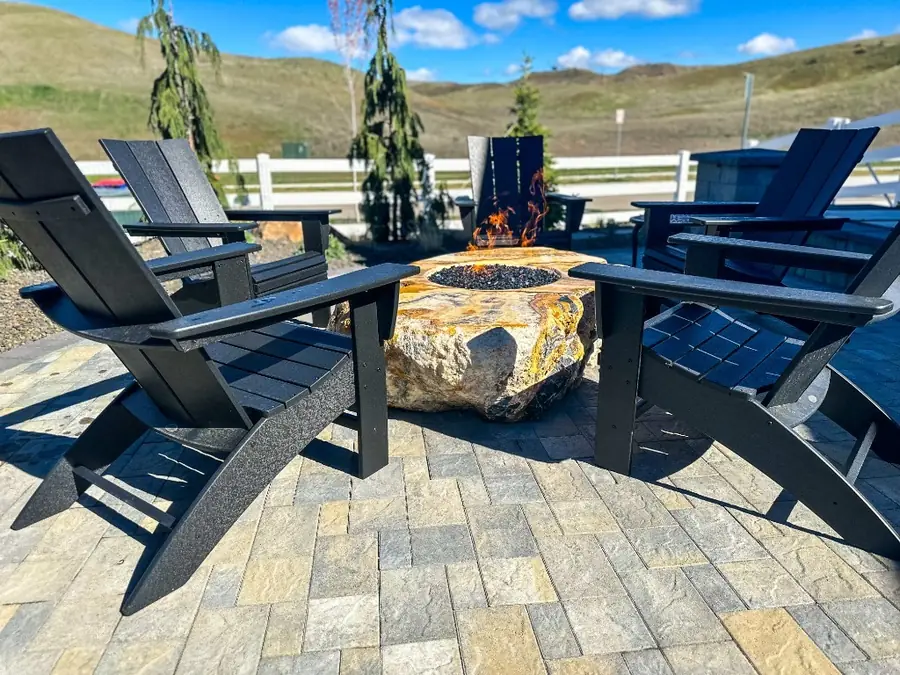
A Boulder Fire Pit, a Stacked-Stone Waterfall Wall and a Dog Run, Set Against the Eagle Foothills
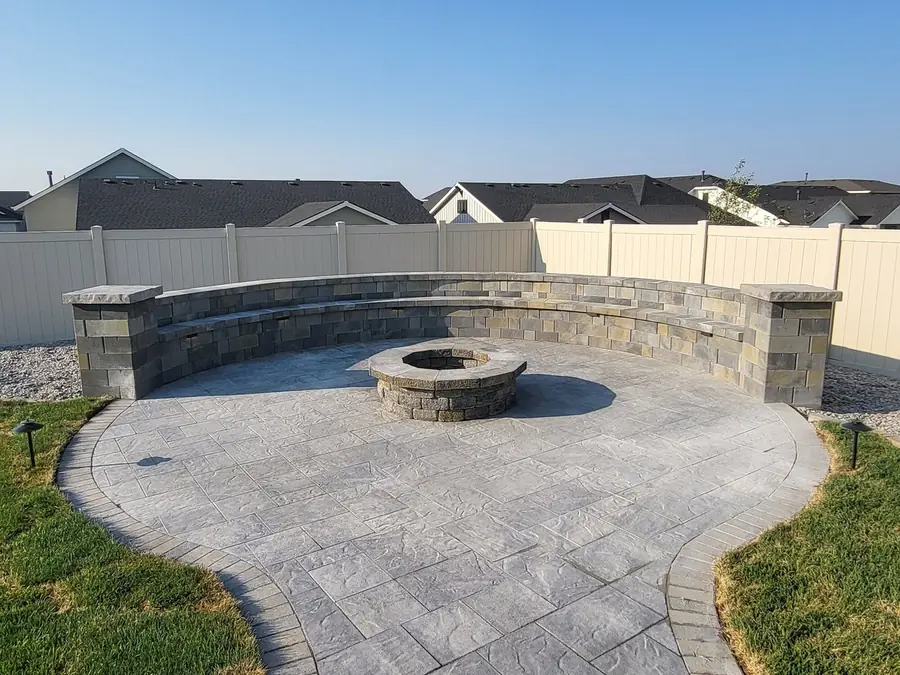
A Round Fire Court With a Curved Seat Wall, Inspired by Ancient Gathering Places
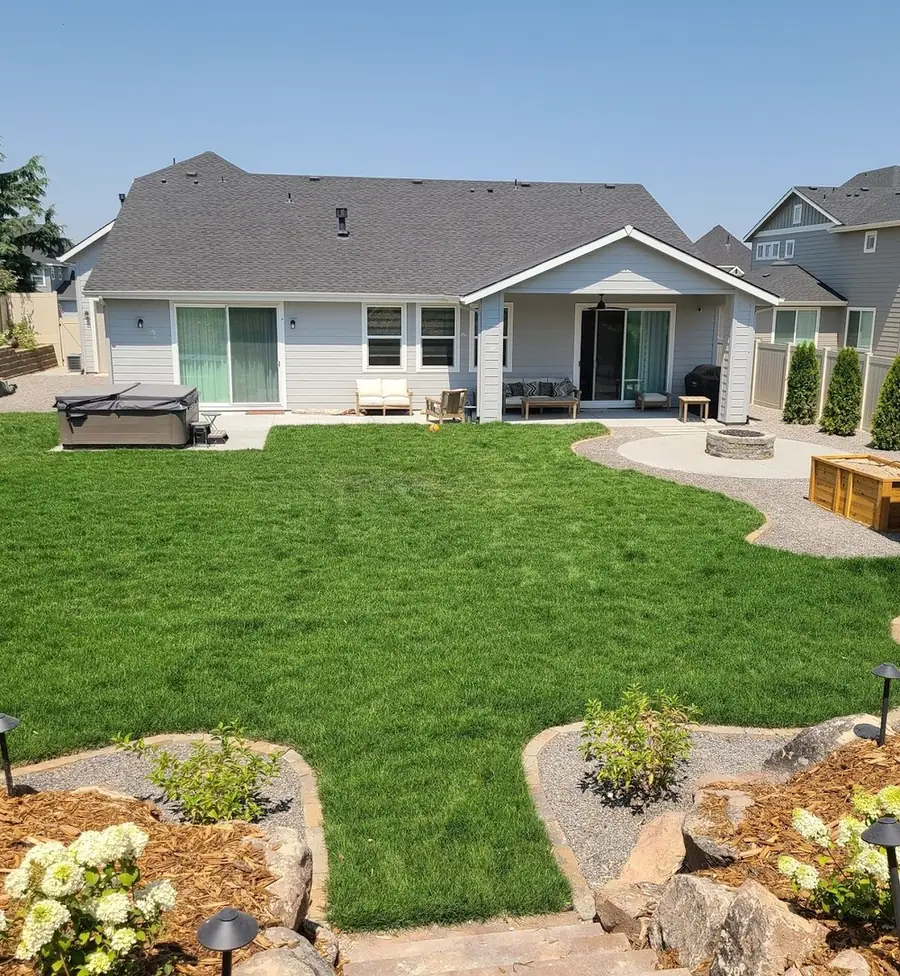
A Complete Backyard From Bare Ground: Sod Lawn, a Fire Pit and New Irrigation
About Water-Wise Design.
Something else on your mind? Ask a Designer
How much rain does Boise get?
About 11.5 inches of precipitation a year. That's NOAA's 1991–2020 normal for the Boise airport, and most of it falls from November to May. July and August average less than half an inch combined, so summer landscapes depend on irrigation.
When does irrigation water turn on in the Treasure Valley?
Around mid-April, and it runs until early October. The Nampa & Meridian Irrigation District, for example, turns its systems on around April 15 and off around the first week of October, depending on water supply. Your district, company or HOA sets the exact dates and any watering schedule.
Is water-wise landscaping the same as xeriscape?
Close, but it isn't a yard of rock. Water-wise design gives each plant the water it needs, groups plants by need, uses drip and smart controllers, and keeps lawn where it's used. It can look as green and soft as a traditional yard.
Can I have a lawn and still be water-wise?
Yes. Size it to how you use it, shape it so the sprinklers water it evenly, give it its own zones and a smart controller, and plant the rest of the yard for less water.
What does a water-wise backyard cost?
Most complete backyards we design and build invest $75,000–$130,000. Water-wise planting and irrigation are part of that, not an extra. A whole property, front and back, typically invests $120,000–$210,000. The real figure is set in design.
Do you install drip and smart controllers?
Yes, as part of a designed landscape. Irrigation is designed with the planting plan and built with the rest of the project. We don't take on standalone sprinkler work.