Landscaping a New Home, Step by Step.
Start designing as soon as you have a closing date, or earlier if you're building custom, so grades, sleeves and utility stubs are settled before concrete goes in. Check your CC&Rs for a landscaping deadline, keep the builder's drainage running away from the foundation, call 811 before anyone digs, and time lawn and planting to the irrigation season. If budget or timing is tight, design the whole property once and build it in phases.
- Start design
- Before or soon after closing
- HOA deadline
- Varies by subdivision: check your CC&Rs
- Before digging
- Call 811 at least 2 business days ahead
- Whole property
- $120k–$210k, design and build
When Should I Start?
Earlier than most people expect. The best time to bring in a landscape designer is before the builder's final grading, when it costs little to set a patio elevation, leave a sleeve under the driveway or stub a gas line for a future fire feature. Once concrete is poured and sod is down, the same changes mean cutting out finished work.
For most buyers in a new subdivision, that means starting design when you have a closing date. Spring build dates fill early, so a fall or winter closing lines up well with a spring build.
If you're building custom, bring the designer in while the house plans are being finished. The landscape plan can then set floor and patio heights together, place downspouts where they can drain, and route power, gas and water to where the yard needs them.
What the Builder Leaves You
Builders' landscape packages vary. They often cover the front yard with sod, a tree or two and sprinklers, and leave the back as graded dirt. Read your purchase agreement and the HOA's rules side by side: if the subdivision requires the backyard to be landscaped too, that part is yours.
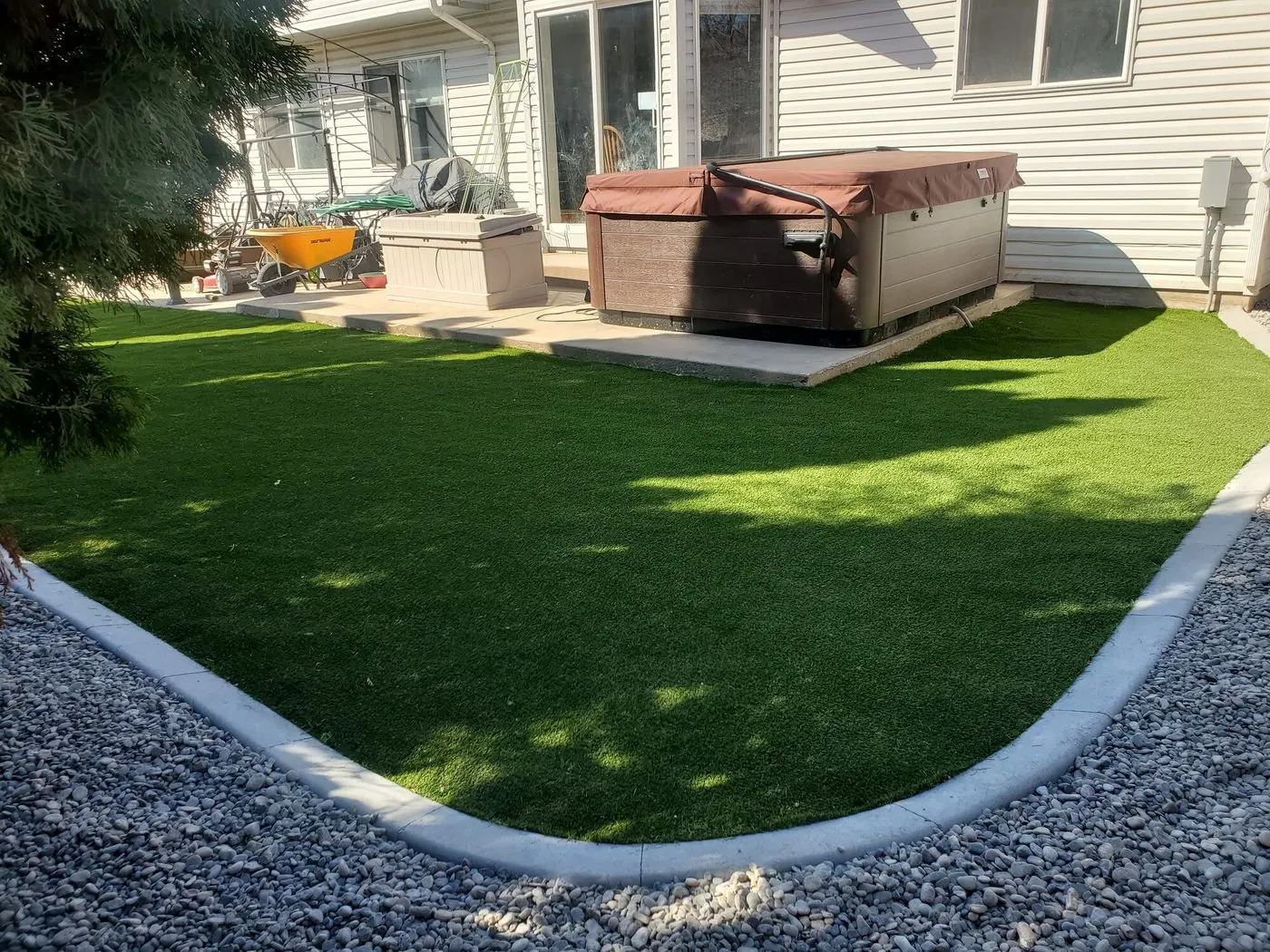
New lots share familiar problems. On a Dry Creek Ranch backyard, we found poor surface drainage that left soggy low spots after every rain, and compacted soil that resisted healthy turf, a classic combination in newer subdivisions. Construction traffic packs the soil down, and building and grading can bring up the layer of lime that lies under many southern Idaho topsoils, which University of Idaho Extension links to yellowing, iron-starved plants.
So we start below ground: loosening and amending planting areas, fixing drainage, then building hardscape and irrigation before the lawn and plants go in.
HOA Landscaping Deadlines
Subdivisions often set a deadline for landscaping after you close or move in, sometimes for the front yard only and sometimes for the whole lot. The window, and what counts as complete, vary from one subdivision to the next, so check your CC&Rs and design guidelines before you plan the schedule.
Approval comes before the work. Plans usually need the architectural committee's sign-off before anything is built, and in newer subdivisions the developer may still run that committee: for associations formed after July 1, 2025, Idaho law lets the developer keep architectural review during its period of control, unless the declaration says otherwise.
If the deadline is close, ask the committee for an extension in writing and show it a designed plan with a build date. A real plan makes a stronger request than bare dirt. Our HOA guide covers what to submit.
Final Grading and Drainage
Idaho's residential code, based on the International Residential Code, requires lots to be graded so water drains away from the foundation: at least 6 inches of fall within the first 10 feet. Where lot lines, walls or slopes don't allow that, drains or swales must carry the water away, and hard surfaces within 10 feet of the house must slope at least 2% away from it.
Landscaping can undo that in an afternoon. Raised beds against the house, a patio set too high or a load of topsoil can leave water running toward the foundation. The code also requires foundation walls to stand at least 6 inches above finished grade, or 4 inches where there is masonry veneer, so soil and mulch can't simply be heaped against the house.
We check the builder's grades before we design, keep that fall in every plan, and carry water from the downspouts to where it can soak in or leave the lot properly. On the Dry Creek Ranch backyard, the fix was a perforated French drain along the patio and across the low lawn, daylighting at the far edge of the property, built before any hardscape went in.
Call 811 Before Anyone Digs
Idaho law requires anyone excavating to request utility locates through the one-number service, Digline, at least two business days and no more than ten before digging. You can call 811 or file a ticket online, and the utilities mark their lines for free. Marks are good for up to four weeks, and if digging hasn't started within three, the request has to be renewed.
The only exemption that fits a yard is digging less than 15 inches deep on private property outside a recorded utility easement, and even then not where there's reason to think a line is there. Footings, walls, tree pits and grading usually go deeper, so we request locates for every project.
The utilities mark their own lines. Private lines added later, such as a gas line to a grill, power to a shed or an irrigation main, may not be marked, so tell us what you know about your lot.
Irrigation Hookups
New subdivisions in Nampa, Meridian and Boise must have pressurized irrigation, canal water that runs completely separate from the drinking water system. Depending on where you live, a district, a canal company or the city runs it. With the Nampa & Meridian Irrigation District, for example, the district owns the lines up to the delivery valve on your lot. The sprinkler system after it is yours, and the district asks that it be easy to disconnect from that valve.
Before you design, find out who supplies your water, when the season runs and whether there's a watering schedule. NMID turns its systems on around April 15 and off around the first week of October, and asks that each zone be designed to draw no more than 5 to 7 gallons per minute. Its advice to new buyers is simple: ask about irrigation water before you buy.
If the builder installed a basic system, we check its zones, heads, pipe and controller before deciding whether to extend it or replace it as part of the new design.
The Seasons, and Building in Phases
Each season suits different work:
- Fall and winter. Design, HOA review and permits. Hardscape can often be built whenever the ground isn't frozen or saturated.
- Spring. The busiest build season. Irrigation water arrives around mid-April, so lawn and planting follow it.
- Summer. Building continues, and new lawns and plants need close watering through the heat.
- Early fall. Cooler days suit planting, but new plants still need water after the canals close in early October, so we plan fall planting around that.
Building in phases works well when it is planned. Design the whole property once, then build in an order that never undoes finished work: grading, drainage, irrigation mains, sleeves and conduit first, then the terrace and walls, then structures, fire and planting. A complete backyard typically invests $75,000–$130,000, and the whole property, front and back, $120,000–$210,000, design and build included. One sensible split is the backyard first and the front later.
See new-home landscapes for how we plan the whole property around your HOA's timeline.
Your New-Home Landscape Checklist
- Read your purchase agreement for what the builder's landscape package includes.
- Find your HOA's landscaping deadline and approval process in the CC&Rs.
- Ask the builder for the lot's grading plan, and where the downspouts and drains go.
- Before concrete is poured, ask for sleeves under walks and drives, a gas stub and outdoor outlets where the yard will need them.
- Find out who supplies your irrigation water, the season dates and any watering schedule.
- Check that the ground falls at least 6 inches in the first 10 feet away from the house.
- Call 811 at least two business days before anyone digs.
- Book design in fall or winter for a spring build.
- If you will build in phases, design the whole property first.
Sources
- Idaho Residential Code (IRC 2018 with Idaho amendments), R401.3 Drainage and R404.1.6, via UpCodes
- Idaho Code §55-2205, Notice of excavation
- Idaho Code §55-2210, Excavations exempt from notice
- Digline, Idaho's one-call service (811)
- Nampa & Meridian Irrigation District, Pressurized urban irrigation systems
- City of Boise, Guide to Residential Construction (permits, 2023)
- Idaho Code §55-3204A, Declarant control and architectural review
- University of Idaho Extension, Controlling Iron Deficiency in Idaho Plants (CIS 1042)
Rules change. We confirm every one for your property before a design is final.
About New-Home Landscapes.
Something else on your mind? Ask a Designer
When should I start landscaping a new home?
As soon as you have a closing date, or earlier if you're building custom. Spring build dates fill early, and starting before final grading lets the plan set patio heights, sleeves and utility stubs while they are still easy.
How long do I have to landscape after closing?
It depends on your HOA. Deadlines vary by subdivision and are set in the CC&Rs, sometimes for the front yard only and sometimes for the whole lot. Check yours, and ask the committee in writing if you need more time.
Do I need to call 811 before landscaping in Idaho?
Yes, for almost any landscape project. Idaho law requires locates through Digline at least two business days, and no more than ten, before excavating. Only digs less than 15 inches deep on private property, outside recorded utility easements, are exempt, and footings, walls and tree pits go deeper than that.
What does it cost to landscape a new home?
The whole property, front and back, typically invests $120,000–$210,000. A complete backyard typically invests $75,000–$130,000, and an outdoor living space on its own $50,000–$85,000, design and build included. Building in phases from one design spreads the investment without redoing work.
Should I keep the builder's sprinkler system?
Sometimes. We check its zones, heads, pipe and controller first. A basic system can often be extended; one laid out without beds, trees or drip in mind is often better replaced as part of the new design.
Can you landscape a new home in winter?
Much of it, yes. Design, approvals and permits suit fall and winter, and hardscape can often be built while the ground isn't frozen. Lawn and most planting wait for irrigation water, which usually arrives around mid-April.