Design-Build, or Bidding a Finished Plan?
Design-build puts design and construction with one firm, so price and design develop together and one team answers for the result. Design-bid-build separates them: you hire a designer, then invite contractors to bid the finished plan. Bidding gives you price competition on identical drawings. Design-build gives you cost feedback while you design and a single point of responsibility. Either works with complete drawings and a clear written contract.
- Design-build
- One firm designs and builds
- Design-bid-build
- A designer first, then contractors bid
- Our design fee
- Set after the site visit, fixed before design starts
- Complete backyard
- $75k–$130k, design and build
Two Ways to Get a Landscape Built
In design-bid-build, you hire an independent designer or design firm to draw the plan. When the drawings are done, you send them to several contractors, compare the bids and sign with one. The designer works for you, and the contractor builds what is drawn.
In design-build, one firm does both. The Design-Build Institute of America calls the single contract for design and construction the fundamental difference. For a residential landscape it is often two agreements in a row with the same firm: a design agreement, then a fixed-price construction contract once the design is final.
Idaho's rules are the same either way. The state's exemption for landscape contractors covers their right to plan and supervise their own work, and anyone doing a construction job over $2,000, materials and labor together, must be registered with the state.
How Design-Build Works
A designer visits, learns how you want to live outside and agrees a comfortable range with you. The plan is drawn by people who price and build landscapes every week, so cost is checked as the design develops instead of discovered at the end. The build team knows the drawings because its own designer made them.
The strengths are speed, one point of responsibility and fewer surprises between plan and price. If a wall has to move or the soil turns out softer than expected, there's no argument about whose drawing was wrong. When we took on a Dry Creek Ranch backyard, the owners wanted one contract covering everything from the drainage to the plant choices, and that is what design-build gives.
The trade-off is less price competition. You aren't comparing several bids on the same drawings, so you rely on the firm's openness: a detailed proposal that matches the design, clear allowances for anything not yet chosen, and a written process for changes.
How Design-Bid-Build Works
A designer you hire draws the plan to the level of detail you pay for. Contractors price it, you compare, and you choose. The strengths are competition on identical drawings and a designer who represents you, not a builder.
The trade-offs sit in the gaps. Bids only compare well when the drawings are complete enough for everyone to price the same thing: grades, drainage, wall engineering, irrigation, lighting and materials. Whatever the drawings leave open, each bidder fills in differently, and those differences come back later as change orders. A design drawn without live pricing can also come in over budget, which means redesign and another round of bids.
Bidding takes time, too: time to gather bids, level them so they compare fairly, and check references. And if the plan and the site disagree during the build, you're the one standing between the designer and the contractor.
Where the Costs and Risks Sit
Neither route is cheaper by definition. They put cost and risk in different places:
- Design cost. With bidding, you pay the designer, and drawings detailed enough to bid cost more than a concept. With design-build, the design fee buys drawings detailed enough to build and price from, made by the team that will build them.
- Price certainty. Bidding gives competitive prices for what is drawn, and anything undrawn is a risk. Design-build gives one fixed price once the design is final.
- Responsibility. Bidding splits it between designer and contractor. Design-build puts it with one firm.
- Time. Bidding adds a bid round after design. Design-build overlaps pricing with design.
- Your role. With bidding, you referee between designer and builder. With design-build, you are the client of one team.
Watch the allowances on either route. An allowance is a placeholder budget for something not yet chosen, such as light fixtures, a feature boulder or specimen trees. A proposal with thin allowances looks cheaper than it is, so compare what each allowance would actually buy, and ask how the difference is settled once you choose.
Idaho law protects you the same way on either route. Before you sign a residential contract over $2,000, the general contractor must give you the homeowner disclosure required by Idaho Code §45-525, explaining your right to lien waivers, proof of insurance, extended title insurance and a surety bond, and you sign to acknowledge it.
How a Design Fee Works
We don't publish a design fee, because sites differ too much for one number to mean anything. After the site visit, we set the fee in a written agreement based on the size of the site, its grade and how much you want to build. It's fixed before design starts, and it doesn't rise if the build budget does.
Ask any designer the same questions: what the fee covers (concept, revisions, 3D views, construction details, engineering coordination), how many rounds of revisions are included, whether any part is credited toward construction, and who owns the drawings.
Ownership matters if you might bid the plan. Some design-build firms license their drawings only for their own build, while others let you take them elsewhere for an added fee. Know which before you sign.
When Bidding a Finished Plan Makes Sense
Bidding is a good choice when:
- You already have complete construction drawings, including grades, drainage, wall engineering and irrigation.
- The scope is simple and well defined, such as planting and irrigation to a finished plan.
- You want an independent designer to represent you during construction.
- You have time for a bid round, and are comfortable comparing bids line by line.
Design-build tends to suit projects where design and cost decisions are tangled together: slopes and walls, outdoor kitchens with gas, power and water, structures that need permits, and anything where the site may hold surprises. Those are the projects we design and build: an outdoor living space typically invests $50,000–$85,000, and a complete backyard $75,000–$130,000.
The Routes in Between
The choice isn't always one or the other. Three middle routes work well for homes:
- A negotiated build. You hire an independent designer and pick one builder early, who prices the plan as it develops. You give up a bid round and gain live pricing.
- Design first, decide later. You hire a design-build firm for design only, under an agreement that says whether and how you may use the drawings elsewhere, then decide who builds.
- A concept, then development. An independent designer draws the concept, and a design-build firm develops it into buildable drawings and a fixed price.
Each of these works when the agreements say plainly who owns the drawings and who answers for what.
What to Ask, Whichever Route You Take
- Is the contractor registered with the Idaho Contractors Board, and can I see proof of liability and workers' compensation insurance?
- Will I receive the Idaho Code §45-525 homeowner disclosure before I sign?
- What exactly is included, what is excluded, and what are the allowances?
- How are changes priced and approved: in writing, before the work is done?
- Who handles engineering, permits and HOA approval?
- What is the payment schedule, and is each payment tied to completed work?
- What does the warranty cover, for how long, and what does it ask of me?
- Who owns the drawings, and may I use them with another builder?
Our contractor guide goes deeper on registration, insurance, lien waivers and contracts, and our process shows how a design-build project unfolds, step by step.
Choosing a Route
- Decide how much you want to manage yourself during design and construction.
- If you will bid, make sure the drawings are complete enough to price the same way.
- Get every bid or proposal in the same format, with inclusions and exclusions spelled out.
- Ask how the design fee is set, what it covers and who owns the drawings.
- Check every contractor's Idaho registration and insurance.
- Expect the §45-525 disclosure before you sign a contract over $2,000.
- Insist on a written contract, a payment schedule tied to work done and written change orders.
- Compare warranties in writing, for plants and for workmanship.
Sources
- Design-Build Institute of America, What is design-build?
- Idaho Code §45-525, Residential property disclosures
- Idaho DOPL, Contractors frequently asked questions (registration)
- Idaho Code §54-3003, Exemptions and use of titles (landscape contractors)
- Idaho Attorney General, Consumer Watch (Summer 2026): hiring a contractor
Rules change. We confirm every one for your property before a design is final.
Designed and Built by One Team.
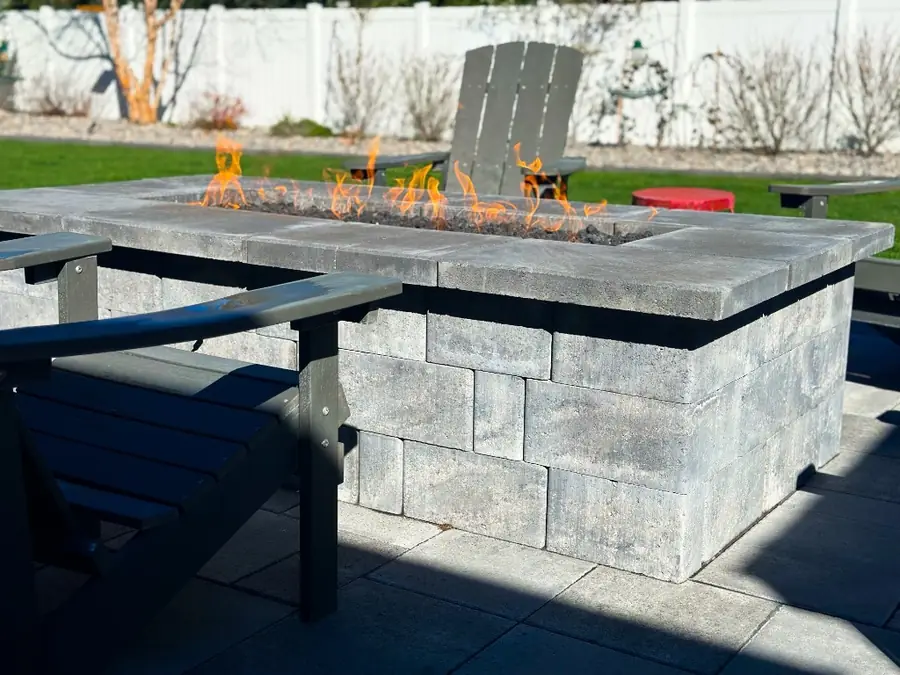
A Paver Terrace, a Built-In Gas Fire Table and Drainage That Finally Works
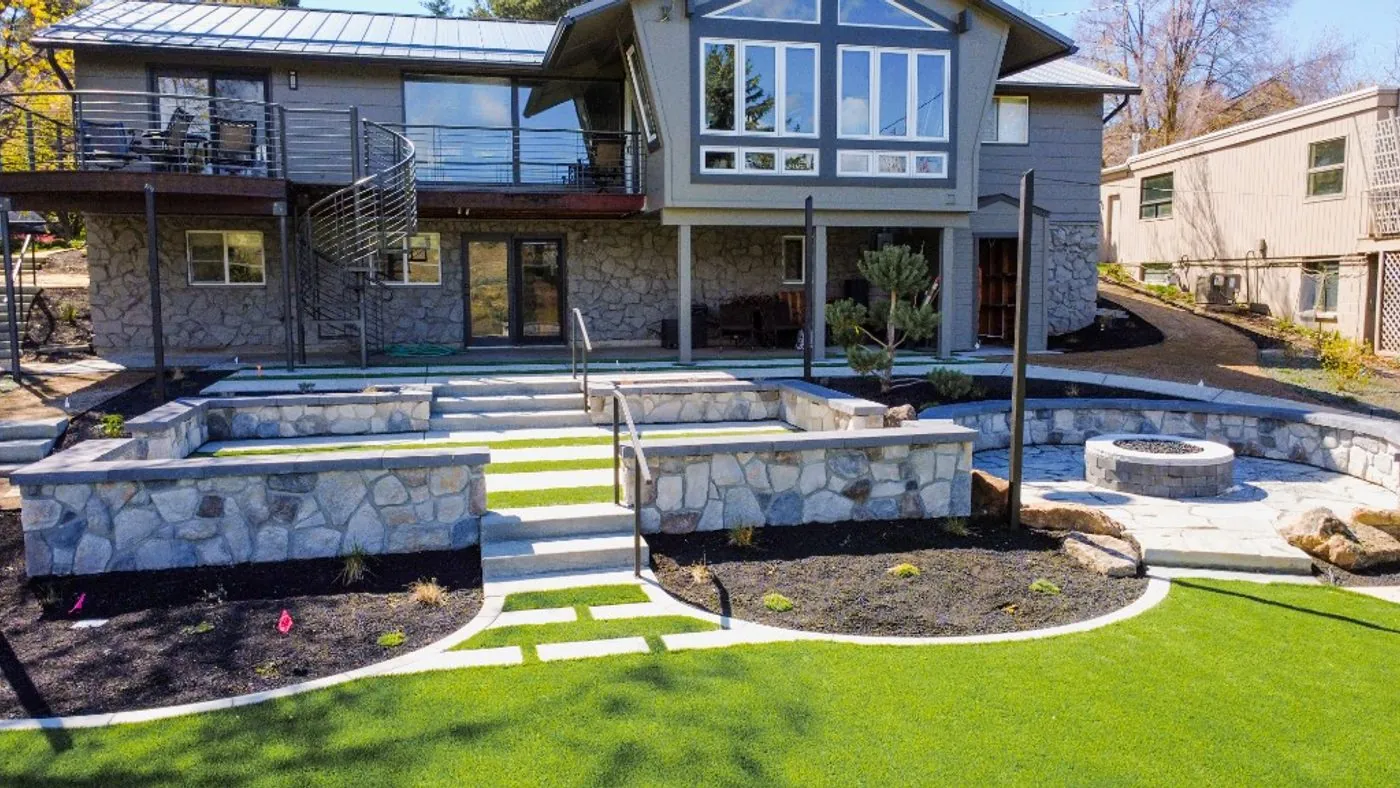
A Terraced Foothills Backyard: Stone Walls, Wide Steps and a Fire Terrace With a View
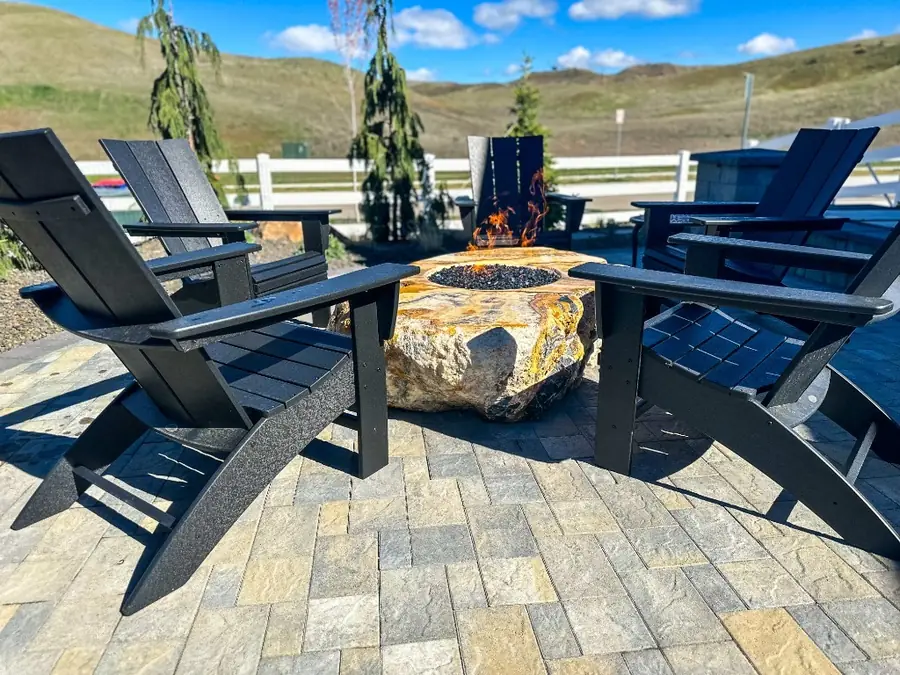
A Boulder Fire Pit, a Stacked-Stone Waterfall Wall and a Dog Run, Set Against the Eagle Foothills
About Design-Build.
Something else on your mind? Ask a Designer
Is design-build more expensive than bidding a plan?
Not necessarily. Bidding adds price competition on what is drawn; design-build checks cost while you design and avoids paying for redesign when a plan comes in over budget. Scope, site and finishes move the total far more than the route does. Most complete backyards we design and build invest $75,000–$130,000.
What does a design fee cover?
Drawings detailed enough to build and price from. For us that means a concept plan, 3D renderings, the details the build needs and an investment estimate. The fee is set in a written agreement after the site visit and fixed before design starts.
Why don't you publish your design fee?
Because it depends on your site. The size of the site, its grade and how much you want to build all change the work. We set the fee in a written agreement after the site visit; it's fixed before design starts and doesn't rise if the build budget does.
Who's responsible if the plan doesn't fit the site?
In design-build, the firm that drew it and builds it. In design-bid-build, the answer depends on the contracts, which is why complete drawings and clear contracts matter so much on that route.
How long does a design-build project take?
A few months, depending on scope and season.